

Turkish Breakfast is the Best Breakfast in the World. Here's How to Make One at Home.
It's more approachable than you think. Sharing all my secrets from eight years of eating them in Türkiye and making them in the US.

I’m so glad you’ve stopped by. I’m Leslie, an enthusiastic home cook who loves making dishes that delight others. I am particularly fond of Turkish food, no-knead breads, and meals that hold memories. Most of all, I love sharing them with you!
If you enjoy this post, it would mean so much if you’d subscribe and click the ❤️ button at the bottom. I read and respond to all comments, so if you have any thoughts or feedback, or just want some help in the kitchen, drop me a note!
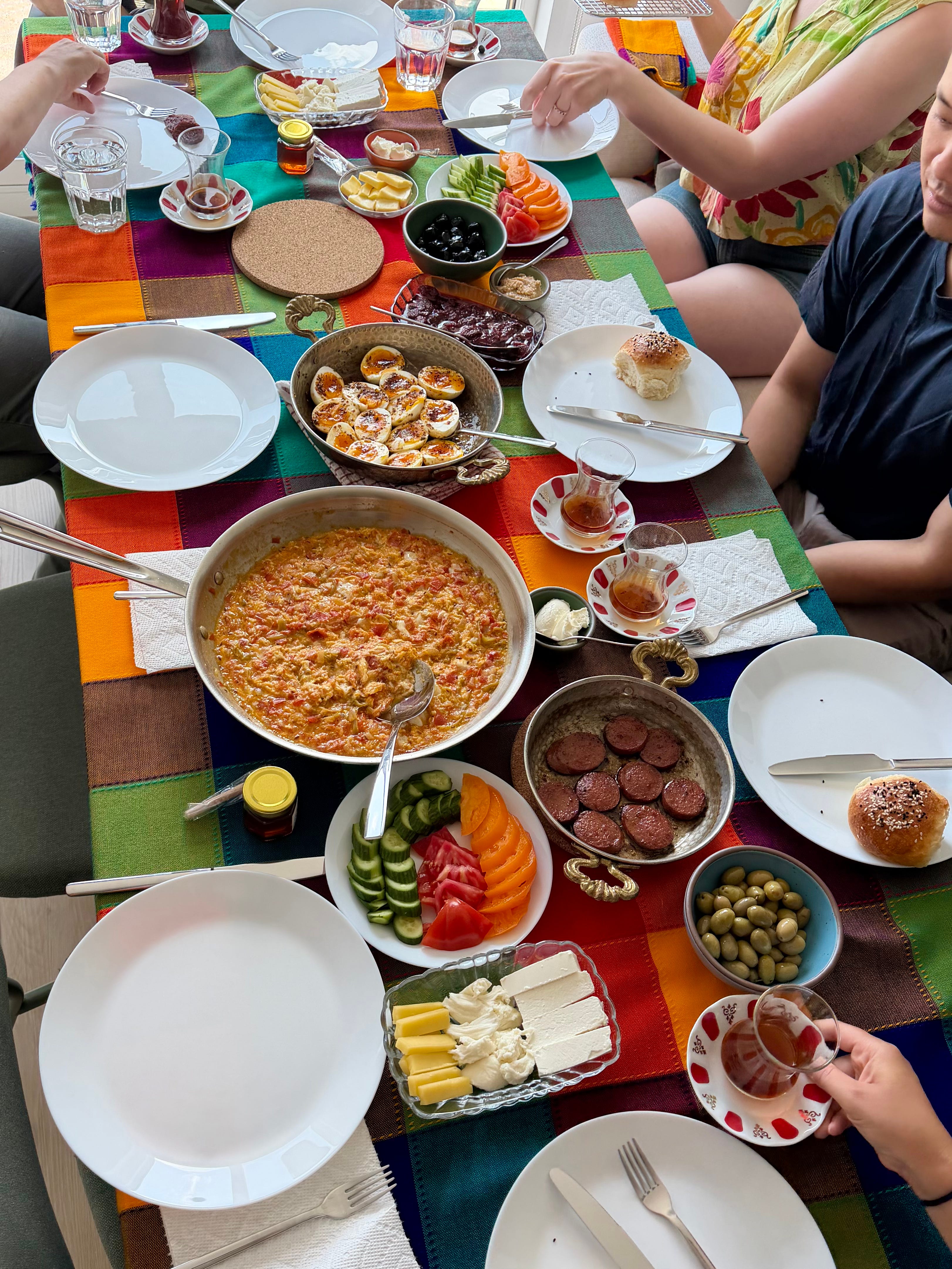
For most of my life, an ideal weekend breakfast would be a plate of fluffy pancakes with over easy eggs and crispy bacon. Fresh whipped cream and a side of berries would really be going all out. I had my smoothie bowl and avocado toast phase, too (if you didn’t know I was a millennial, now you do). As an American Jew, I’m culturally obliged to confess my love for a good bagel with smoked fish and cream cheese.
Then in 2018, my definition of an ideal weekend breakfast changed, suddenly and abruptly.
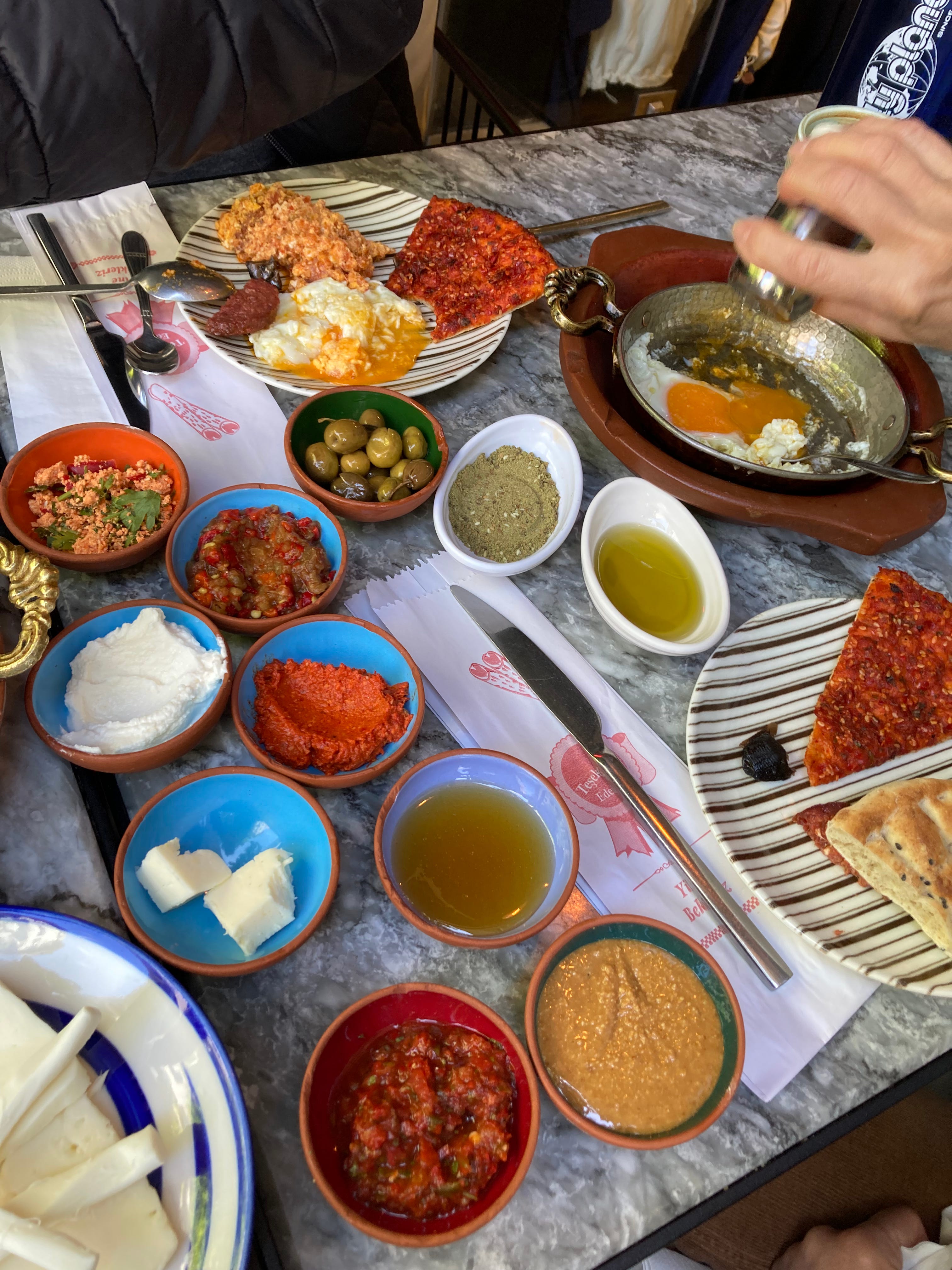
I could say it was without warning, but in retrospect, my partner did warn me. The moment I sat down for my first Turkish breakfast, my standards skyrocketed. Several plates came out at once: soft scrambled tomatoey eggs, savory beef sausage, two kinds of olives, three cheeses, crisp cucumbers and juicy tomatoes, strawberry jam, tahini and grape molasses, nutella, honey and the most amazing thick cream, bread still warm from the oven. There was barely enough room to fit our small tea glasses on the table.
This was all just for two people, and it was a pretty normal spread, for Turkish standards that is.
Since then, I’ve been trying to recreate this magic at home. Now, with eight years of experience (add it to my resume), I’m ready to guide you through the eighth wonder of the world: Turkish breakfast.
What is a “Turkish Breakfast”?
Kahvaltı, or breakfast in Turkish, is in a league of its own. I know, you probably think I’m biased, but some trustworthy sources say the same.
Specifically, serpme kahvaltı, or “sprinkled breakfast,” is the style of Turkish breakfast that has this reputation. It’s made up of a variety of dishes that are sprinkled to cover the table and are all shared, family style. This style of breakfast isn’t eaten every day in Turkish homes, but it is a common way to enjoy a weekend morning, at home or at a restaurant.
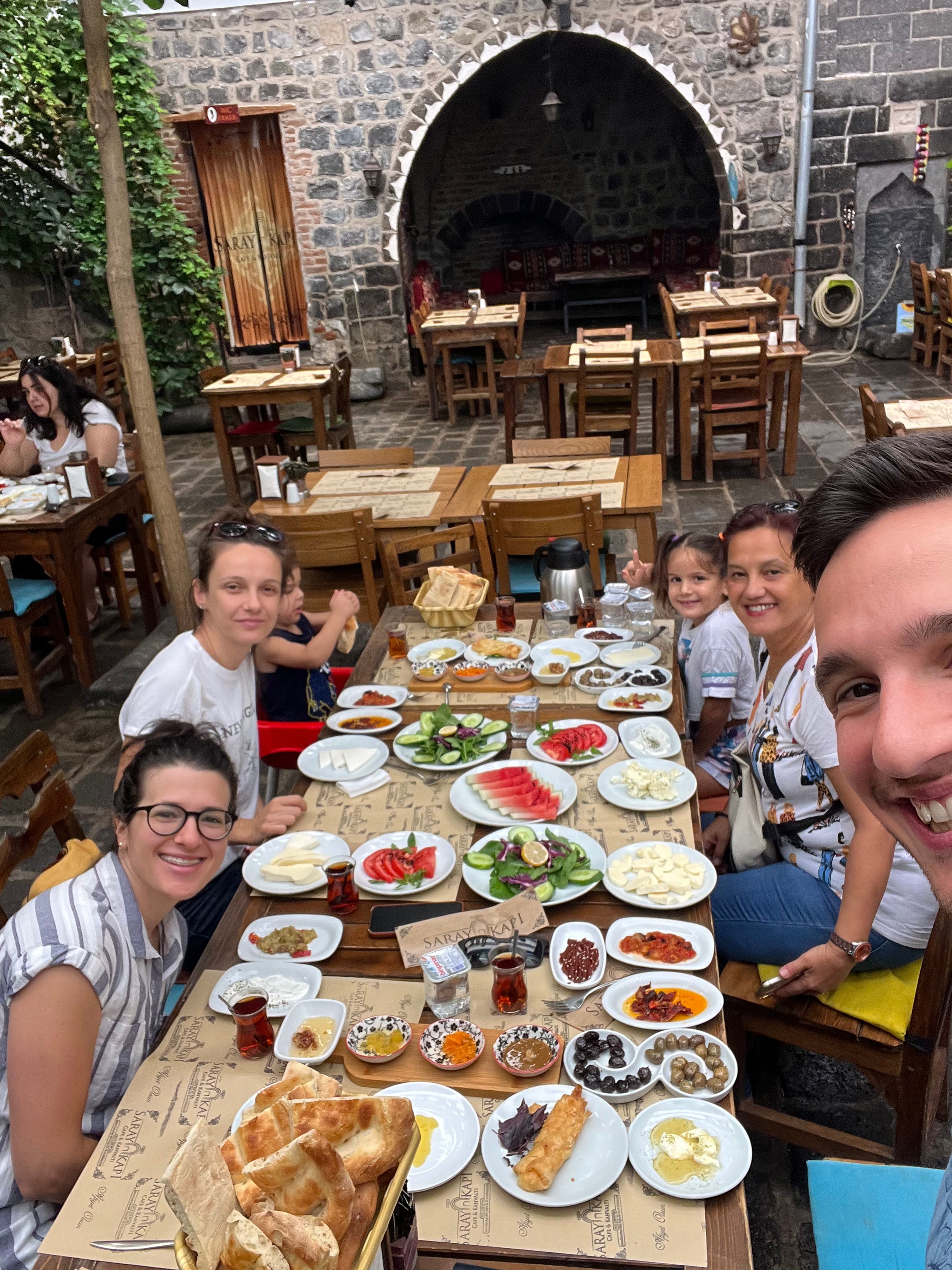
While there are over a hundred different dishes that could be featured in a Turkish breakfast, you would usually have 8-20 at your table. Fewer don’t capture the abundant feeling of kahvaltı, and as one person put it in my Instagram comments, “any more is just showing off.”
So how do you choose which dishes to include? There are seven categories that outline any great breakfast spread, and I’ll walk through each of them. Then, I’ll share how to build your own menu and prepare like any teyze (Turkish auntie) would: almost effortlessly.
Fair warning, I’m not covering a hundred-plus dishes. Honestly, I don’t know them all! Consider this a friend’s tour, not an encyclopedia. I’m always happy to answer questions though. 🙂
(1) Eggs & Hot Dishes (Yumurta ve Sıcaklar)
If you’ve come across Turkish breakfast on social media, you’ve probably seen çılbır: poached eggs over garlic yogurt, drizzled with chili butter. I’d like to set the record straight: this is not a very popular egg dish in Türkiye. Çılbır is more of a rural homestyle dish that Western food media picked up and ran with. My husband didn’t grow up eating it, and neither did most Turks I know. There’s nothing wrong with putting it on your table, just know you’re not getting the full picture of kahvaltı from it alone.
So what do Turks actually eat? Eggs, just not that way. Here are some of the most popular ways to eat yumurta (eggs) in Türkiye.
Menemen is perhaps the national breakfast dish of Turkiye. To make it, onions, green peppers, and tomatoes get cooked down and then over low heat, eggs are added to make a soft scramble. The onions are a debated item, but I won’t get into that. This dish is one of my favorites. You can add a breakfast meat (covered below) to it as well.
Fried or scrambled eggs - I think you know what these are. 😉 Optionally, add one of the breakfast meats, too.
Boiled Eggs - you can make them soft, medium, or hard boiled. You can also take them up a notch by transforming them into this butter-glazed egg dish. Everyone who tries this dish is amazed at the flavor from just a few simple ingredients. All you do is gently toss peeled and halved boiled eggs in spiced butter.
Another egg dish, from Türkiye’s Black Sea region, is called kaygana. It’s somewhere between a thick crepe and an omelet.


Other hot dishes that are just as popular are:
Kahvaltalık etler (breakfast meats): The national favorite is sucuk, a fermented beef sausage that is very flavorful. It gets cut into coins and browned in a pan before serving. Then there’s pastırma, which is similar to pastrami in name and in preparation. It’s a salt-cured beef that is heavily spiced with cumin, fenugreek, and garlic. Kavurma is cubed beef that is cooked until tender.
Sigara böreği literally translates to cigarette börek. It’s a savory pastry that looks like a spring roll, made of cheese that is wrapped in yufka (filo dough) and fried. While there are so many varieties of börek in Türkiye, this is the most common one at serpme kahvaltı.
Fried potatoes, or patates kızartması in Turkish, is pretty much the same thing as french fries or chips, if you’re British.
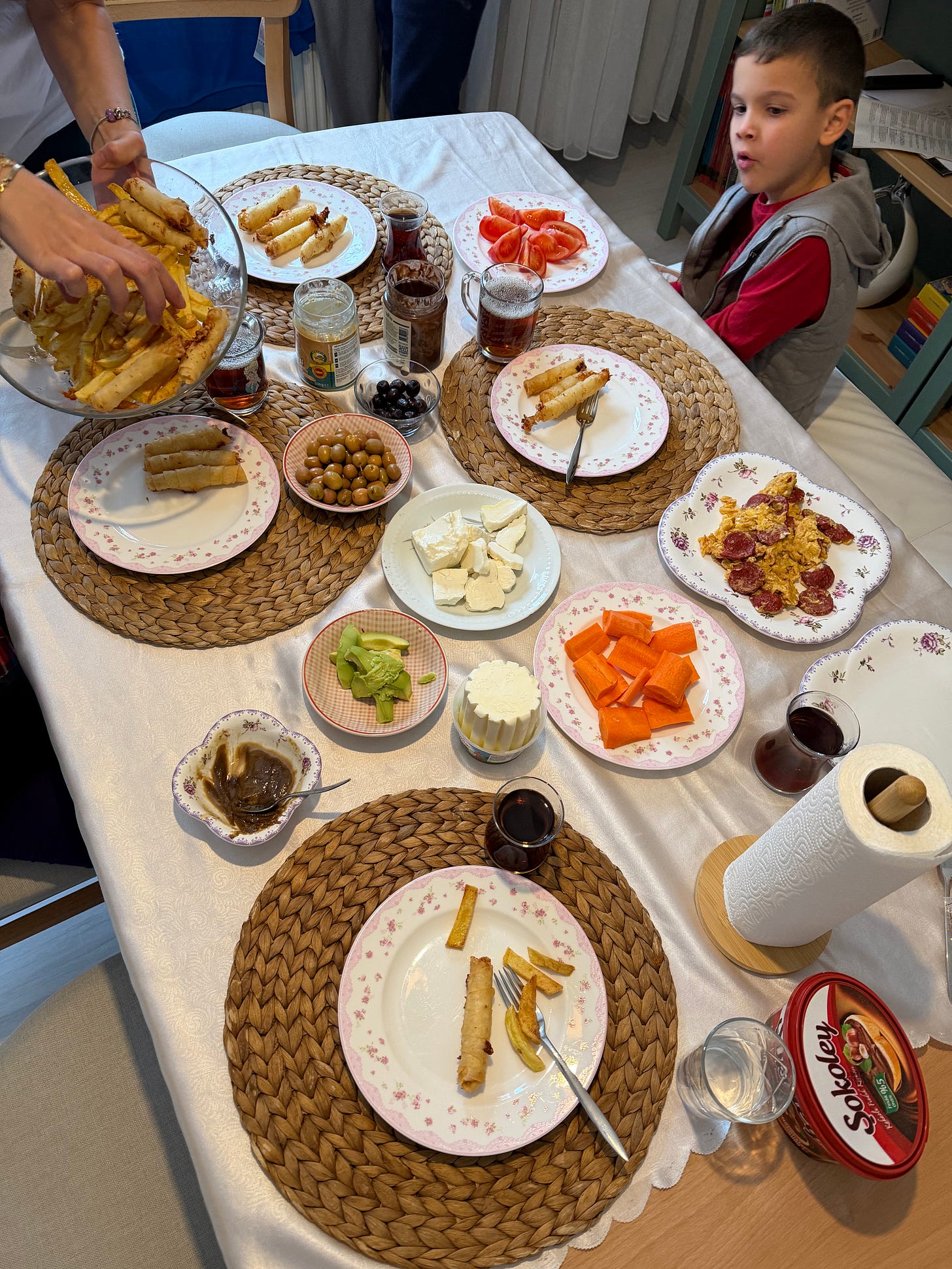
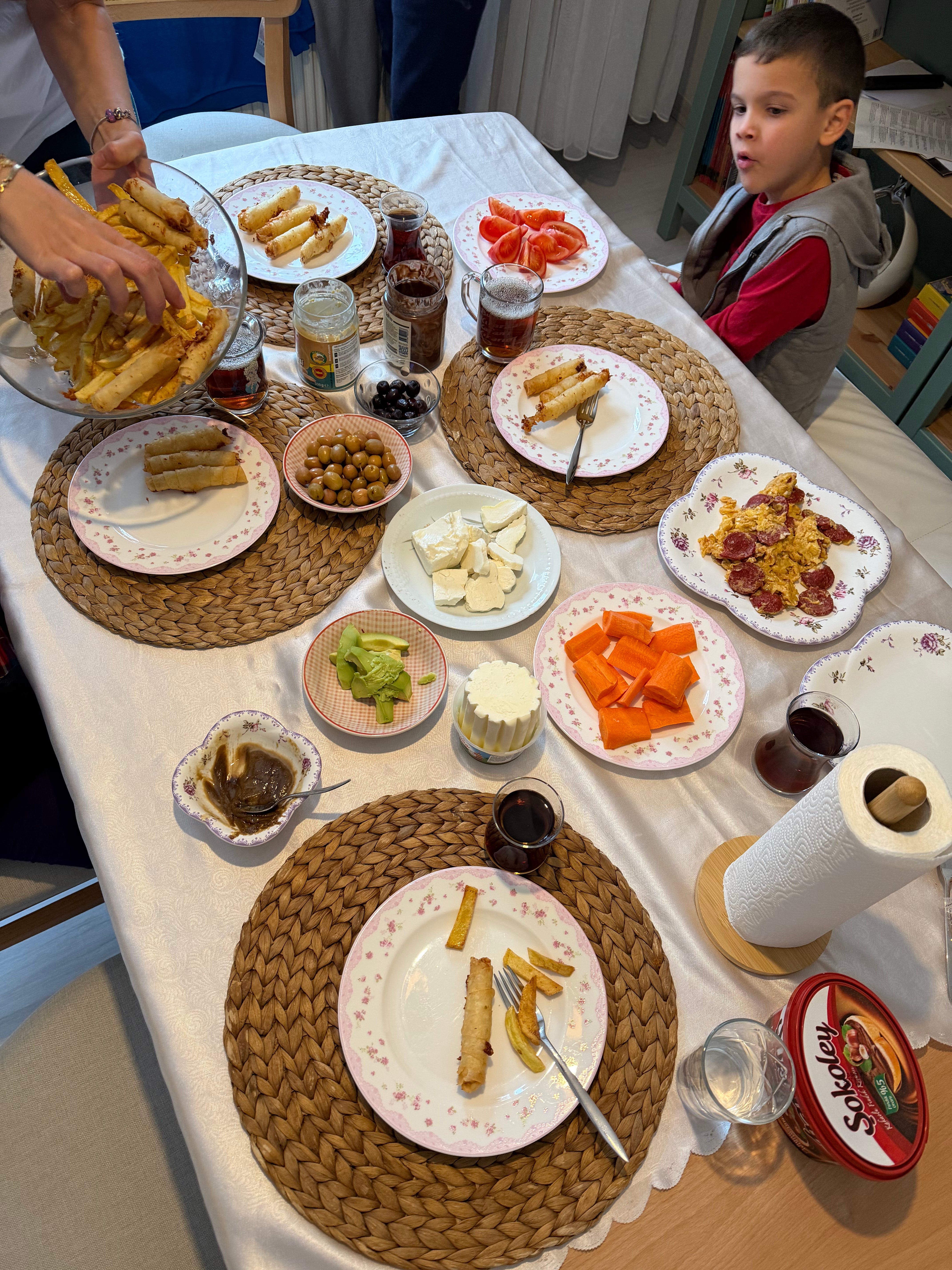
This is a breakfast at my sister-in-law’s home. Sigara böreği and fried potatoes are family favorites. Scrambled eggs with sucuk is on the right. A variety of olives, cheeses, fresh vegetables, and spreads is sprinkled around. Gözleme is made of a thin dough that envelops various fillings, usually cheese and spinach or herbs, although potatoes or minced beef can be used, too. It’s then grilled on a sac, which is a slightly domed griddle. We made this at home recently with store-bought yufka (phyllo dough), as that is how my mother-in-law prepares it, and we cooked it in a cast iron pan.


Homemade gözleme on the left and the best one I've tried was from a restaurant in Istanbul on the right.


(2) Variety of Cheeses (Peynir Ceşitleri)
There are so many cheeses in Turkish cuisine that it’s hard to wrap my head around them. I am not a big cheese person, or perhaps just not a fan of what’s available in the US, but the variety and freshness of Turkish cheese have really converted me.
A few that are quite common at breakfast are:
Beyaz peynir, literally “white cheese,” is similar to feta cheese, but it tends to be a bit less salty and more creamy. There are many varieties of it. Some are more soft and almost spreadable, others are more aged and a bit crumbly. They can be made with cow’s, sheep’s or goat’s milk, but cow’s milk is most common, and what my husband and I prefer.
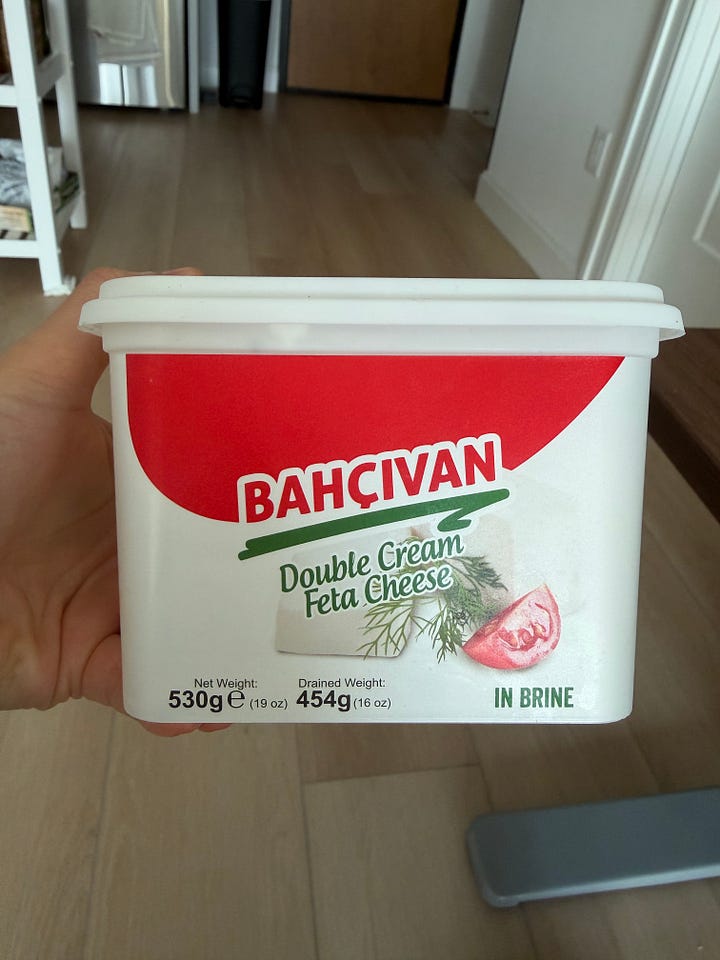
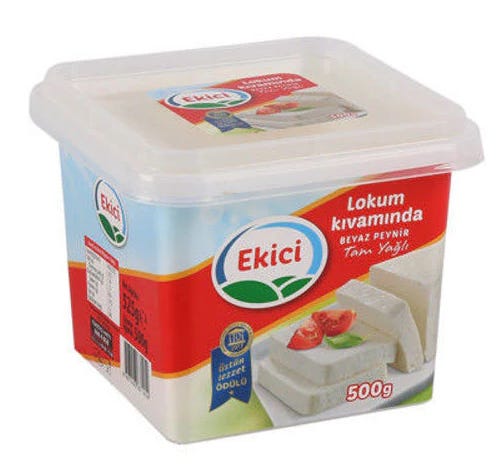
These are the two kinds of beyaz peynir we usually get. Dil peyniri is a string cheese that is similar to a low moisture mozzarella.
Kaşar peyniri is a semi-hard cheese that melts well. It ranges from softer versions, to harder, more aged versions. I’ve heard some people compare it to a mild cheddar, which is usually what I use as a substitute, but the flavor of kaşar peyniri is not quite the same.


The cheeses that show up at breakfast are largely dictated by personal taste in addition to what region or city one is in. In Türkiye, it’s common to have at least two varieties of cheese both in one’s fridge and at breakfast. My (non-traditional) suggestion is that if you don’t eat cheese, then something else creamy, like avocado, would be a good alternative.
Update: When my editor (my husband) reviewed this piece, he wrote “ay-yay-yayyyyy nooooo” to my avocado suggestion. I’m still leaving it here, but now you know the real Turkish opinion.
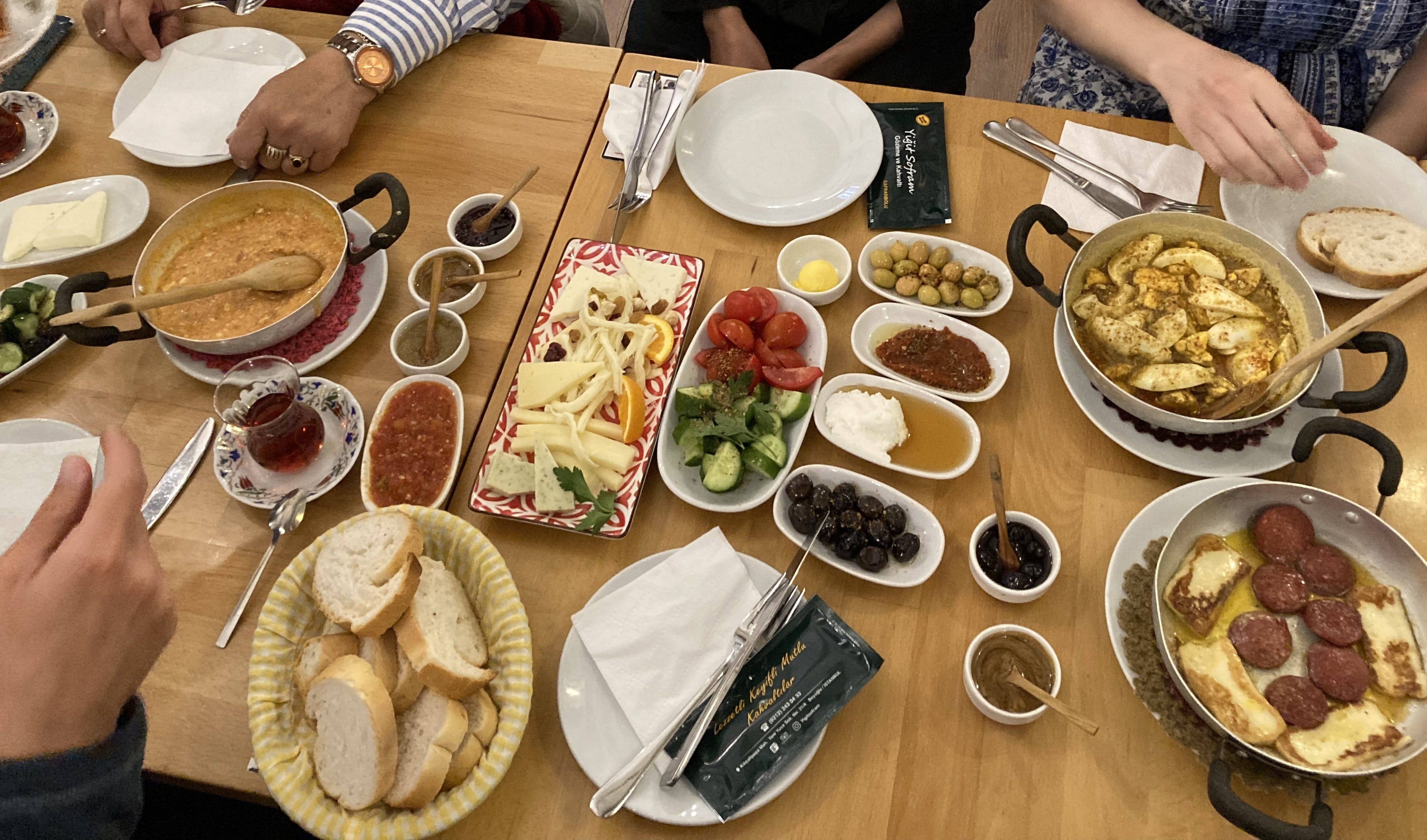
(3) Fresh Vegetables & Dried Fruits and Nuts (Taze Sebzeler ve Kuru Yemişler)
There is no denial that Turkish breakfast can be rich. Eggs, some fried foods, cheeses, and we haven’t even gotten to the spreads yet!
This category nicely balances out the others. Cucumbers, tomatoes, greens (arugula, parsley), and sweet red peppers often are cut up and arranged on a plate. Occasionally, seasonal fruit will make an appearance. I absolutely love these things on the table, and I often include them in my everyday breakfast now.
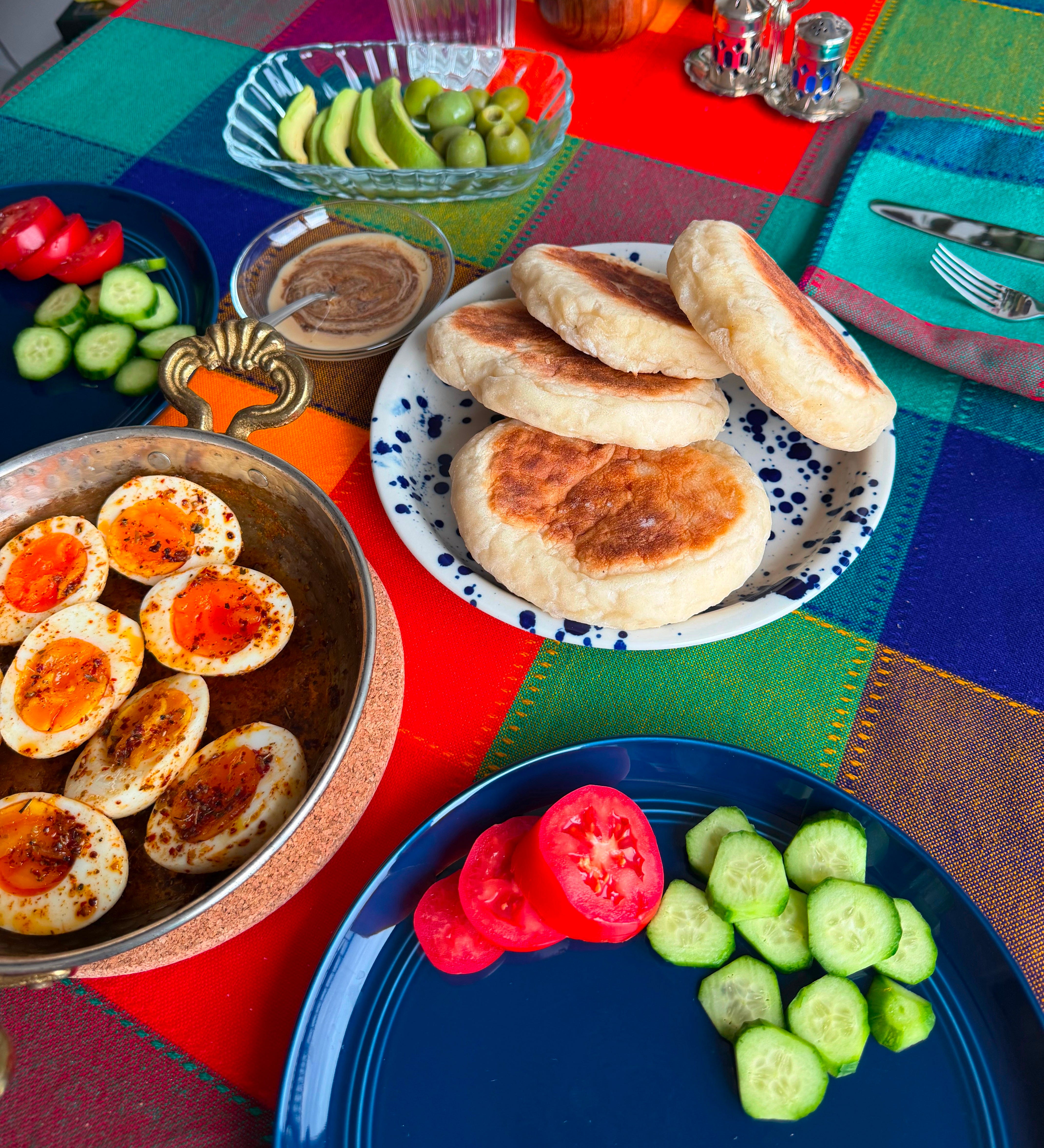
A few nuts, usually walnuts, and dried fruits like apricots or figs, might sit on top of a plate of cheese. They are quite optional, just adding a nice little flourish.
(4) Variety of Olives (Zeytin Ceşitleri)
Yes, a category in and of itself. Olives are a critical part of Turkish breakfast. Usually there are at least two varieties - one black and one green. My husband grew up in a region of Türkiye where many olive trees grow and his mom always has and still does pickle her own olives! That was so interesting to me because it’s unheard of someone pickling their own olives in the US (at least on the east coast).
(5) Jams and Spreads (Reçeler ve Ezmeler)
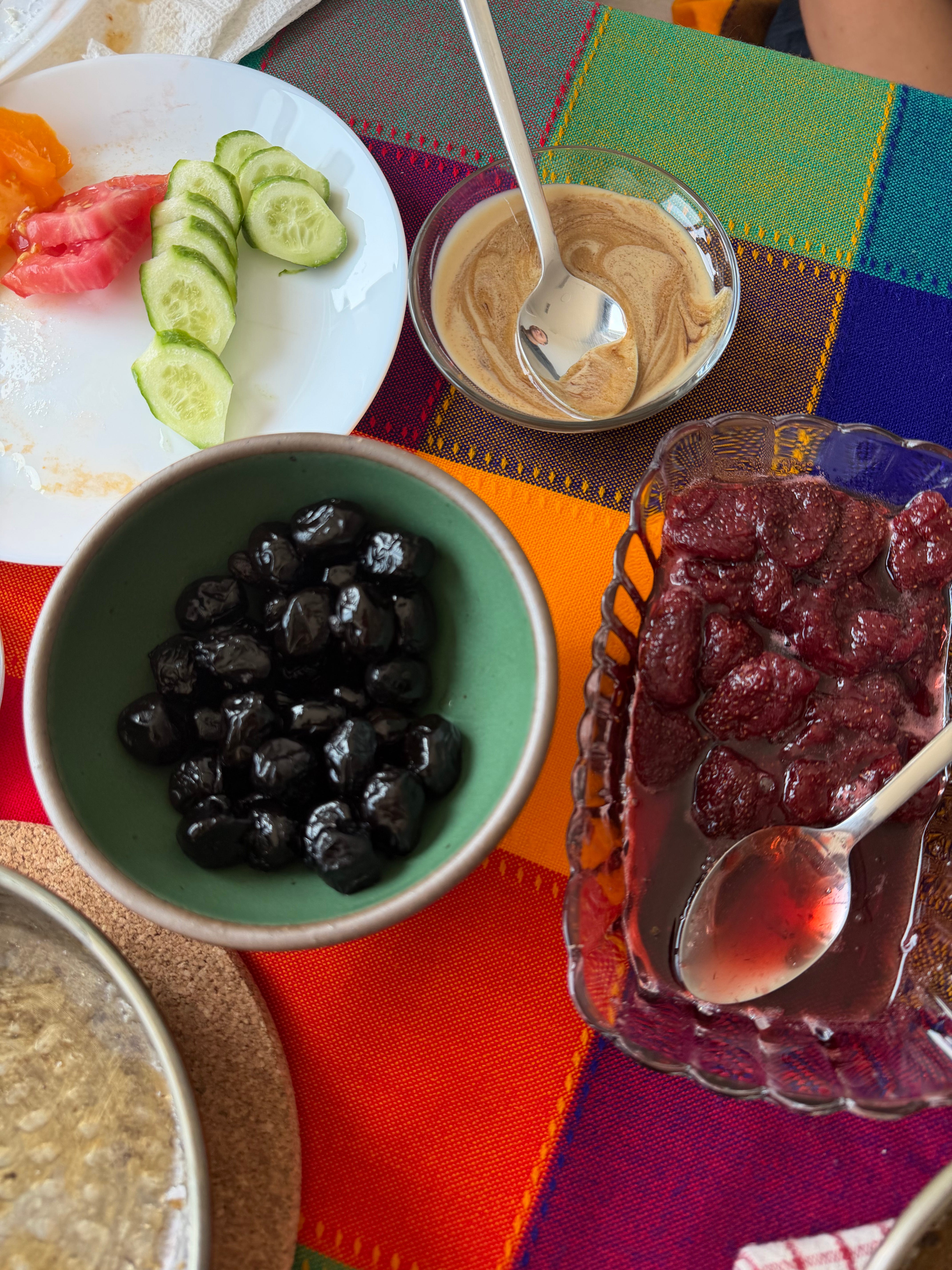
Jams (Reçeler) come in many varieties in Türkiye, but common ones are apricot, strawberry, sour cherry, and fig. Some more niche jams are made from watermelon rind or pumpkin!
Now what makes Turkish jam different from others? I’m so glad you asked. First, the preparation usually involves letting the fruit sit in sugar overnight before cooking it. Second, reçel is made from large, bite-size pieces of fruit or whole berries that maintain their shape after being cooked. This is quite different from American jam, in which the fruit tends to break down. Third, Turkish jams tend to be on the thinner side. This is because pectin is rarely added and a lot of sugar is, which allows for a lot of “syrup” to form. I plan to share my recipe for a less sugary version of Turkish jam soon. 😉 If you can’t find Turkish jam, any jam you enjoy will work just fine!Tahin Pekmez, or tahini (sesame butter) and grape molasses, are a classic pairing for Turkish breakfast. This nutty and sweet pair compliment each other beautifully and are usually served already mixed together in a little bowl. Any runny tahini can be used, but I do feel that Turkish tahini has the smoothest texture and best flavor. (I say this as someone who grew up on mostly Israeli and Greek tahinis, which are most common in the US.)
Bal Kaymak might be my favorite part of a Turkish breakfast! Bal is honey and kaymak is similar to clotted cream, but often higher in fat and therefore more delicious. 😉 Clotted cream would make a good substitute if you can’t find kaymak. And if you don’t have access to either, then use some whipped butter instead. Here, the honey and kaymak are not mixed together, but rather they often sit in the same dish. I serve them separately, but next to each other.
Acuka is a breakfast spread make from tomato paste (salça) and sweet red pepper paste (tatlı biber salçası) with crushed walnuts, garlic, and various spices. I love the strong, sweet, and slightly sharp flavor of acuka. I like to make a simple version by just mixing together equal parts of tomato paste and pepper paste with a a bit of olive oil, cumin, oregano, pul biber, and salt.
Butter (tereyağı) is always welcome, too.
There are so many more! A chocolate hazelnut spread, like Nutella or any other brand, is quite popular. Other favorites of mine include nut spreads like hazelnut butter, süt reçeli (literally, “milk jam,” which is similar to dulce de leche but made with less sugar), and zahter (za’atar) mixed with olive oil.
(6) Breads and Savory Pastries (Ekmek Çeşitleri)
There’s a huge variety of bread in Turkish cuisine. Because we live in the US and Turkish bakeries are very hard to come by, I love to develop easy, no-knead recipes for Turkish breads so I can make them at home.
Some common breads on the breakfast table are ekmek (simply “bread”), which is similar to American French bread. It has a soft interior and thin, crispy crust. Ramazan pidesi, a fluffy Turkish flatbread that is often eaten around Ramadan, is my personal favorite. Bazlama are somewhere between a pita and an English muffin and can be prepared on the stovetop.
A less common bread to find on the breakfast table, but that works wonderfully, is çiçek ekmeği, or “flower bread,” which is enriched rolls that are shaped like a daisy.


Some other breads that you’ll find on the breakfast table are:
Simit: a ring-shaped bread that is coated in toasted sesame seeds. Some people call this a “Turkish bagel” which I would argue it is not. 🙂 But anyway, they are delicious, and my preferred type is a bit dense and chewy (ok, yes, a bit like a bagel).
Pişi: a plain fried bread. I don’t have much to say about this, as it’s not my personal favorite, but it’s fine and neutral. If you prefer fried breads, you might like this.
Poğaça and Açma: both savory pastries made with enriched doughs. They come in different varieties like plain and some with different fillings like cheese or olive spread, or chocolate. Some poğaça is made with yeast and other are made with just baking powder (which tend to be more dense). Açma is almost always made with yeast and is shaped like a twisted ring. Açma is often laminated, too.
(7) Beverages (İçecekler)
If you’ve ever been to Türkiye, you know that çay (tea) is an ever-present part of Turkish life, and breakfast is no exception to that rule. Çay is free flowing at Turkish breakfast. Fruit juices might also be on the table, but aren’t mandatory.
Finally, the Turkish word for breakfast “kahvaltı” literally means “the thing before coffee.” So, it’s common that a Turkish breakfast is capped off with a cup of Türk Kahvesi.


How to create a menu
Since serpme kahvaltı should feel abundant and generous, I like to make sure that everyone feels like there is enough to enjoy. If something runs out, I almost always have more of it to replenish the dish. If there are leftovers, which is more common, I just wrap them up and put them in the fridge to enjoy the next day.
Also, there is no “one right way” to make a Turkish breakfast. There are an infinite number of combinations of dishes to make up your kahvaltı table, and none are wrong (unless yogurt is your centerpiece… yogurt is never the center of a Turkish breakfast).
This is my general guidance, but of course, feel free to do what feels best for you and your company.
For every four people, choose the following:
1 egg dish and optionally, an additional hot dish
1-2 cheeses
Cucumbers and tomatoes (greens and red peppers are welcome, easy additions)
1-2 types of olives
1 jam
2 additional spreads
1 bread
1 beverage (preferably çay)
This can all be easily scaled up or down depending on the number of guests.
How to prepare the feast and set the table
Although I share recipes for making homemade versions of Turkish breads, and spreads, not everything needs to be homemade. If it’s your first time making a Turkish breakfast, I’d encourage you to focus on making the main egg dish and to buy everything else. That way, all you have to do is put things on serving dishes and set them out.
It’s always a good idea to prep what you can the day before. First, put olives and spreads in their serving bowls, which should be small snacking bowls. Don’t have small snacking bowls? Don’t worry. You can use ice cream bowls, sauce dishes (you’ll likely have to use a few, which is great because then you can distribute them around the table), or even tea saucers. Cheeses and fresh produce should be sliced and arranged on medium-sized plates (i.e., something smaller than a dinner plate). All of these can be prepared the day before, covered, and kept in the fridge.
Bread is always best when fresh, so if you can, bake or buy your bread within 24 hours of your breakfast. If that’s not an option, then I suggest freezing fresh bread in advance. You can reheat it from frozen in an oven at 350 F/180 C for 5-10 minutes. Bread is usually served in a napkin-lined basket.
The only real cooking you’ll have to do in the hour before your breakfast is the egg or hot dish.
For a recent breakfast I hosted, I didn’t want to fuss with waking up at the crack of dawn to get everything ready. So, I came up with ways to prep in advance for these egg dishes, too! (The truth is that I was busy making bread from scratch and preparing the spreads, produce, and cheeses which I told you were better prepped ahead of time. 🙃 So please, do as I say, and I will also heed my advice going forward.)
For the menemen, you can prepare the onion, pepper, and tomato mixture up to three days in advance. Keep it refrigerated and when ready to serve, just heat up that mixture in a frying pan with 1-2 tablespoons of water. Then add the eggs and gently cook according to recipe instructions. For boiled eggs or butter-glazed eggs, you can boil them a day or two in advance and reheat by placing them in hot water for 5 minutes (not actively boiling water).
Finally, the drinks! If you want to prepare Turkish tea at home, but you don’t have a çaydanlık, a traditional Turkish tea pot, fear not. You can prepare Turkish tea with a normal tea pot and a kettle of hot water. Add ~3 heaping tablespoons of tea leaves to a pot with ~350ml boiling water and let it steep for 5-10 minutes. Then serve it in glasses or mugs diluted with hot water in a 1:1 ratio. This is the standard preparation of Turkish tea. It allows people to control the strength of their cup, and it just tastes better this way, trust me.
Before you go
If you’ve read this far, then you must be very intrigued, or very overwhelmed. Maybe a bit of both.
If you’re thinking, “I can’t find kaymak or grape molasses or beyaz peynir so this isn’t for me,” then here’s my advice.
Turkish breakfast is not about perfection. The dishes are amazing, but as someone who lives in the US, I know the challenge of finding specific ingredients. What makes it special is the abundance and the generosity. There is excitement in the endless variety of perfect little bites and there is fulfillment in having a leisurely meal with loved ones. You could use this as a guideline to make a wonderful breakfast spread with your own favorite items.
There you have it: the eighth wonder of the world, now slightly less mysterious and hopefully a little more doable in your own kitchen. And if your breakfast standards skyrocket, don’t say I didn’t warn you.
Liked this post? Then give me some love 😊
Thanks so much for reading! This post was probably finished at 2am, tested in multiple kitchens, and overthought to an embarrassing degree—all so you can make something delicious. My recipes are free, but if you want to support my morale, you can:
❤️ Drop a heart below - it’s free and easy and feels like receiving a virtual hug so thank you!
💬 Leave me a comment - I love chatting with you! I read and respond to all of them.
➡️ Share or re-stack this post so other people can find it - help me achieve my dream of becoming everyone's internet cooking friend
😍 Become a free subscriber (no paid tier exists yet, so this is literally the VIP option)
I really appreciate it. I’m so glad you’re here! 💞
This is such a spectacular breakfast, Leslie. I am particularly taken by the breads & the feta like cheese which is creamier & less salty than feta. And I love the fact that Turkish jams are runnier & contain whole pieces.
This is an absolute feast! If starting the morning meant I get all of these- I will be more of a morning person! I live that the morning, the connections, the ingredients are all celebrated. Thank you for sharing such a beautiful post, Leslie-