

Lesson Learned: Never Ignore Your Turkish Mother-in-Law's Recipes
Why did I wait a year to make this refreshing, incredible hibiskus şerbeti?

I’m so glad you’ve stopped by. I’m Leslie, an enthusiastic home cook who loves making dishes that delight others. I am particularly fond of Turkish food, no-knead breads, and meals that hold memories. Most of all, I love sharing them with you!
If you enjoy this post, it would mean so much if you’d subscribe and click the ❤️ button at the bottom. I read and respond to all comments, so if you have any thoughts or feedback, or just want some help in the kitchen, drop me a note!
Scroll down to get right to the recipe
About a year ago, my mother-in-law stopped texting me.
Rest assured, we are on good terms, but we’re not on terms where she’ll share recipes with me.
The trouble is, last summer she sent me a recipe for a Turkish drink called hibiskus şerbeti. It’s a cold, sweet Turkish drink with a history that somehow spans from ancient Persia to my grandpa’s freezer.
…but I never made it.
This post is not a bid to get her to text me recipes again (she doesn’t read my Substack), but I’ll definitely be mentioning it to her so she knows that I do heed her advice (sometimes).
Why has it taken me so long to try this recipe, you might wonder. Well, I had tried şerbet a few times in Turkey in the past, but it was always rose flavored, which is a really hit-or-miss flavor for me.
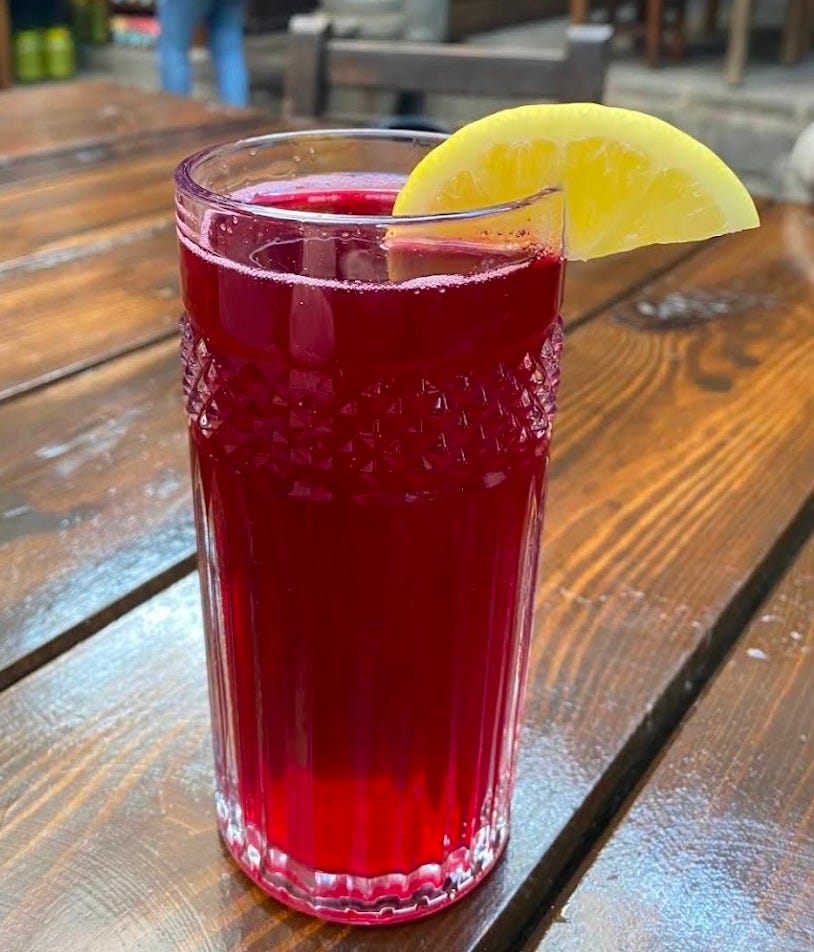
I know that hibiscus and rose are totally different, but I guess I just lumped them together and put it at the back of mind.
Well, the other day, I was longing for a cold summer drink. I made a mint lemonade, and... it just didn’t hit the spot. Then, I recalled some dried hibiscus (aka roselle) that I had bought in Mexico City last December, and with it, my mother-in-law’s recipe.
I pulled up her text and realized how simple it was to make. So I prepared it right away (with a few tweaks—a bit less sugar and fresh ginger instead of dried). Since Tuesday, I haven’t been able to stop sipping it!
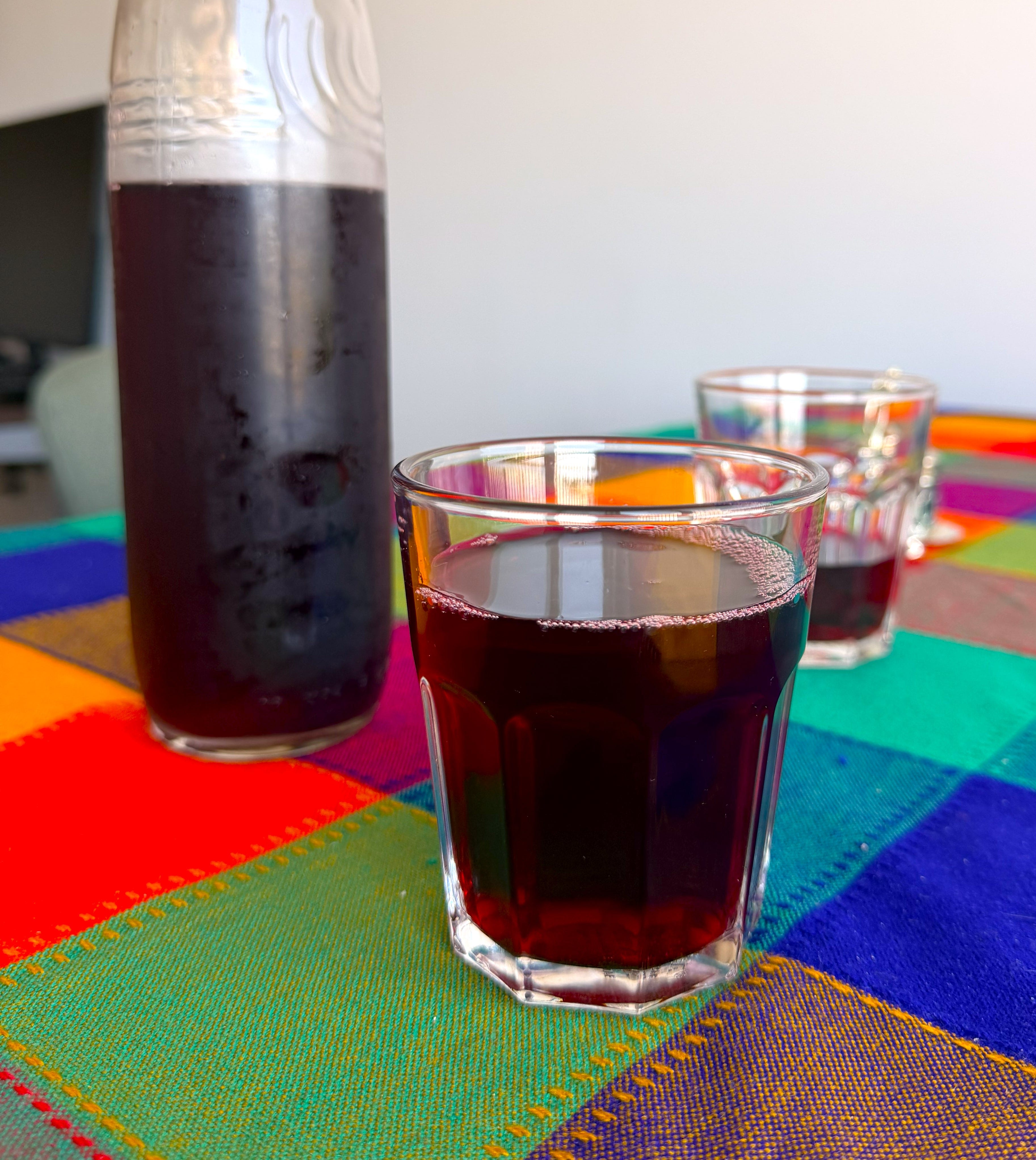
Hibiskus şerbeti is a bit more fruity than floral. It’s bright and sweet, but not overwhelmingly so; it doesn’t make you pucker. The warm notes from the cinnamon, cloves, and ginger and the long steeping time give hibiskus şerbeti more pizazz than your standard hibiscus tea.
In my borderline-obsessive fascination with şerbet, I’ve done a little research on this drink. I learned that şerbet originated as “sharbat” in Persia. It was later introduced to Europeans where it served as basis for sorbet in France, sorbetto in Italy, and syrup and sherbert/sherbet in England.
“Wait a second!” I thought. Sherbert is a dessert I’m quite familiar with because my grandpa, Papa, always had it around when I was little. I never loved it (it was fluorescent green and orange, overwhelmingly sweet and sour), but I loved his generosity.
Similarly, I appreciate my mother-in-law’s willingness to speak my love language: sharing food. We don’t speak the same language (at least, not fluently), but when she shares recipes with me, I feel a bit more seen and understood, even with our language barrier.

I hope that I’ve learned my lesson and will pay attention to my mother-in-law’s recipe suggestions from now on, but only time will tell. What I do know is that I’ll be making a lot of this one.
P.S. My husband was on the phone with his mom as I was writing this, and she was thrilled that I made şerbet — specifically her şerbet. Maybe more recipes are coming. In the meantime, if you’re curious about what other recipes she has shared with me, may I suggest her version of Turkish green beans, taze fasulye? I’m making them (for the 89th time) next week.
Hibiskus Şerbeti
Servings: 4-5
Ingredients
1/2 cup dried hibiscus flowers (18 g)
4-5 whole cloves*
1/2 cinnamon stick*
2 slices ginger*
5 cups water (1200 ml)
1/3 cup sugar (67 g) (See Note 2)
1 slice lemon
*All of these spices are optional. I think they add lovely depth, but if you don’t like any, feel free to reduce or leave them out.
Method
Add the hibiscus, cloves, cinnamon stick, ginger, sugar, and water to a medium pot. Bring it to a boil and mix to dissolve the sugar. Let it simmer for 5 minutes.
Remove the pot from the stove, squeeze in the lemon juice and drop the lemon slice in the pot. Cover and let the mixture steep and cool for 1-2 hours, until it comes to room temperature.
Strain the mixture with a sieve and pour it into a jar or pitcher. Store in the fridge for up to 5 days. Enjoy cold!
Liked this recipe? Then give me some love 😊
Thanks so much for reading! This post was probably finished at 2am, tested in multiple kitchens, and overthought to an embarrassing degree—all so you can make something delicious. My recipes are free, but if you want to support my morale, you can:
❤️ Drop a heart below - it’s free and easy and feels like receiving a virtual high five
💬 Leave me a comment - I read and respond to all of them.
➡️ Share or re-stack this post so other people can find it (help me achieve my dream of becoming everyone's internet cooking friend)
😍 Become a free subscriber (no paid tier exists yet, so this is literally the VIP option)
I really appreciate it. I’m so glad you’re here! 💞
Notes
(1) Adding ice: There is some debate on whether or not to serve şerbet with ice. If you think you might add ice, decrease the amount of water in the recipe to 4 cups (~1000 ml) so that the ice doesn’t dilute the şerbet too much. My mother-in-law actually recommends adding it!
(2) Sugar amount: Şerbet usually has more sugar than this. It is the predecessor to syrups after all! But my husband and I prefer it not to be so sweet. If you’d like to add more sugar, go for it!
Two things.
1) Very good for blood pressure
2) For iced freeze some in cubes so your drink isn't diluted.
I buy Roselle's when they are available here in FL then take out the seeds to plant and freeze the flower for tea later.