

Almost Authentic Turkish Bean Stew in 30 Minutes (Instead of 12 Hours)
My shortcut to kuru fasulye with incredible depth from simple, affordable ingredients

Hi, I’m so glad you’ve stopped by. I’m Leslie, an enthusiastic cook and vagabond who loves making homecooked dishes from around the world.
If you enjoy this post, it would mean so much to me if you’d subscribe and click the ❤️ button at the bottom of the post. I read and respond to all comments, so if you have any thoughts or feedback, I’d love to know!
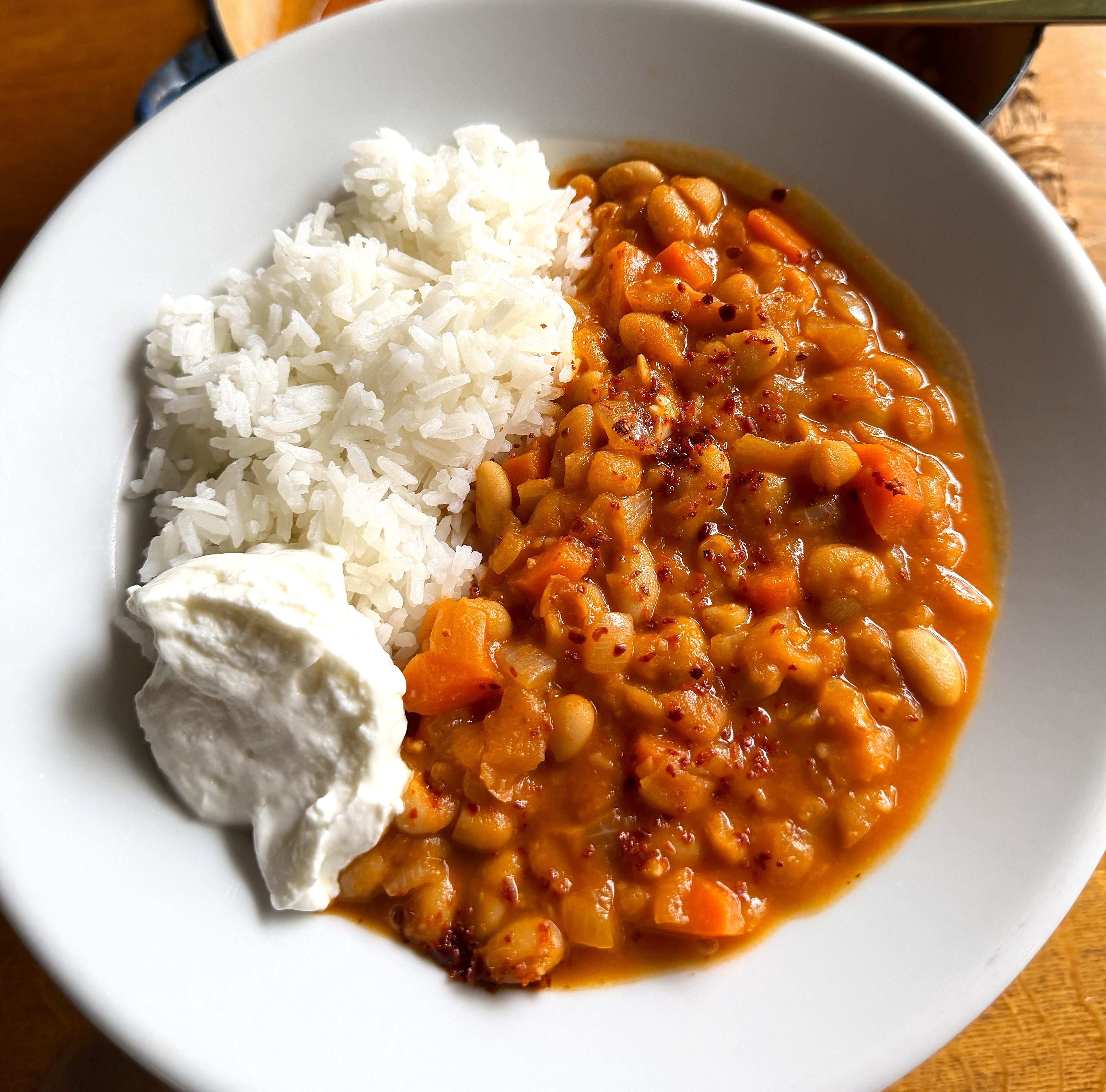
When I want a comforting, nourishing meal on the table in thirty minutes, this is my go-to.
Kuru Fasulye (which literally translates to “dried beans”) is a very common dish in Turkish cuisine. It’s seen as homestyle food, but also served at lokantas (cafeteria-style restaurants). Kuru fasulye is inexpensive, filling, and oh so delicious. The ingredient list is short and accessible, but it delivers great flavor. That’s one of my favorite things about Turkish homestyle cooking.
Bulut (my husband) and I have made this dish several times over the last few years, and surprisingly, this untraditional method gives us the best results in the least amount of time.
I can’t remember when I first tried this dish. What I do remember, though, is when I fell in love with it.
The Bean Backstory
Early on in our relationship, Bulut did not care to read a menu. We half-joked that he’d order the first item that his eyes landed on.
He told me that his favorite restaurants were those that specialized in one thing. You went, sat down, and didn’t even have to order. They brought you their one and only dish.
I understood the concept of what he was talking about, but I had not been to such a place. I was itching to go.
Six years into dating (plus a diamond ring and a pandemic later), he finally made it happen.
On a trip to Turkey in 2022, Bulut took me to a restaurant in Istanbul called Fasuli. As per their name, they specialize in this bean dish: kuru fasulye.
I had eaten kuru fasulye before and enjoyed it, but I was a little skeptical that these beans were worth dedicating a restaurant to. After all, kuru fasulye is kind of a commoner’s meal — cheap and filling, but not a white tablecloth affair. Well, it turned out that this restaurant does have white tablecloths (and a menu, too, but the main thing to order there is pretty clear).
Lo and behold, these were the best beans I’d ever had. I am pretty sure there was a stick of butter in each serving, but still, they were cooked to perfection.


After that experience, I gushed so much about my love for kuru fasulye that Bulut told me he would become a master of making them at home. If a more romantic gesture exists, I can’t imagine what it would be.
Mastering the Beans
Fast forward a bit: Bulut did, in fact, make the beans, and not just once. He probably made them eight times over the next two years. And I made them a few times, too. They turned out great once or twice, but unfortunately, they often became unevenly cooked - some beans would be too mushy and most of them would be too firm.
Not only this, but the humble dish took quite a bit of forethought and time. You had to soak the beans overnight and then cook them for 1.5-3 hours to reach a decent consistency. It’s not a labor-intensive process, but no one is making a dish with a high mental tax — one that requires planning ahead and then a taste test every half hour — as a quick weeknight meal. Especially, when it had resulted in disappointment so many times!
I learned that this was no fault of Bulut’s - these beans are notorious for being difficult to get just right.
Sadly, I became resigned to the idea that I’d only be able to enjoy the best version of kuru fasulye at Fasuli in Istanbul.
Letting go of tradition and discovering a new way
The idea of using canned beans had crossed my mind before, but it felt a little blasphemous. Canned beans aren’t really used in Turkey, and I’m sometimes hesitant to put my own twist on traditional recipes.
But this summer, I found myself in a situation (read: a slightly remote housesit with a bare-bones kitchen) that pushed me to make the easiest, most nutritious meals I could think of. So I threw tradition to the wind and gave in to my curiosity.
Turns out, this shortcut version was a revelation. The beans were perfectly tender - no more undercooked or mushy spots - and they still soaked up that rich, tomatoey flavor. Plus, I eliminated hours of soaking and simmering. In the last six months, I’ve made this at least ten times, which says a lot for someone who’s always testing new recipes.
While not the most authentic version of kuru fasulye, this version closely resembles the real deal, requires minimal time, and received resounding compliments from an honest Turkish man with a discerning palate (ok, yes, it was Bulut).
If you’re looking for a quick one-pot meal with everything you need - carbs, protein, fat, and fiber - this is it.
If you make it, please let me know. And if you end up opening a restaurant where you specialize in this dish, well, let me know that, too. I’d love to stop by and try it out, and I know Bulut would, too.
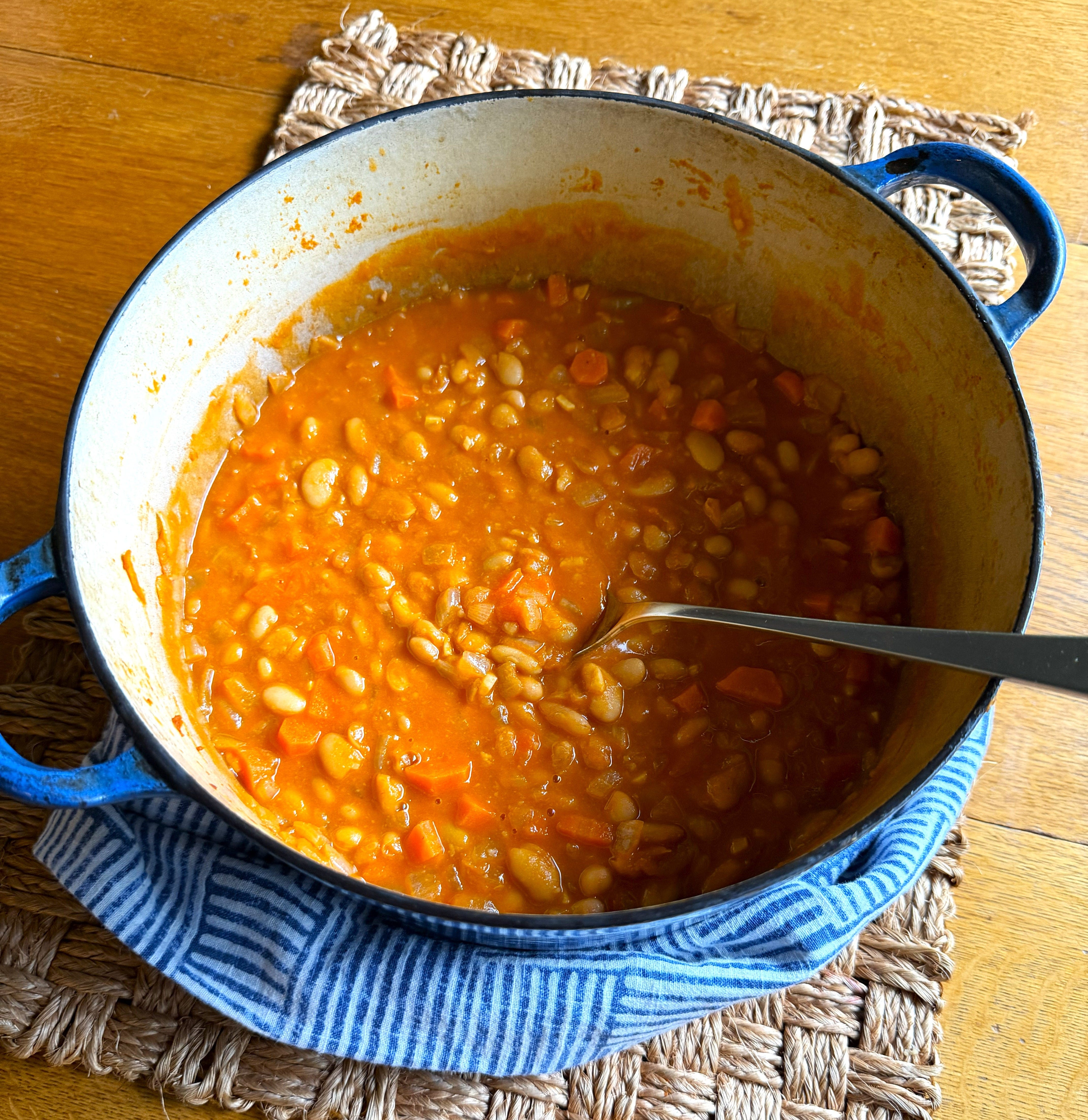
Turkish-Inspired Bean Stew
Kuru Fasulye
Servings: 5-6 | Time: 30 minutes
Ingredients
4 tablespoons of olive oil, butter, or a combination
You can add more if you’d like. See the end of Note 1.
1 medium yellow onion, diced small
Optional: 2 cloves garlic, minced or grated
2 medium carrots, diced into chunks that are (roughly) the size of a bean
3 tablespoons tomato paste (See Note 2)
1 teaspoon kosher salt
2 14 oz cans Great Northern Beans (or Cannellini beans), rinsed and drained
2-3 cups hot water
For Serving (Optional)
Pul biber (aka Aleppo pepper flakes) to garnish
White rice
Plain yogurt (ideally 2%+ fat for flavor)
Method
To a large pot over medium heat, add olive oil and/or butter. When hot, add diced onion and sauté for 2-3 minutes, until translucent but not brown.
Add garlic, carrot, and salt, and sauté for another minute until garlic is fragrant.
Add tomato paste and mix to incorporate it. Cook for a few more minutes, until tomato paste has turned a shade darker and is fragrant.
Add rinsed & drained beans, sauté for ~2 minutes, gently tossing until everything is coated in tomato paste. Be careful not to mash and break up the beans.
Pour in enough hot water to just cover everything. Gently stir once or twice, cover the pot, and keep it at a low boil for 15 minutes.* Turn off the heat and enjoy!
*This is a great time to make some rice, if you’d like!
Kuru fasulye is often eaten by itself, or with a side of rice and plain yogurt. The flavor of this dish tends to settle and improve with time so it makes for great leftovers, too.
Afiyet olsun! Enjoy your meal. 🙂
Notes
(1) On authenticity: As I’ve mentioned, this is not the most authentic version of the dish. This is largely because I use canned beans, but there are a few more reasons why my version is not traditional.
First, my addition of carrots and garlic is a little off-script. There is a different Turkish bean dish called Barbunya, which uses fresh cranberry beans. Barbunya does feature carrots and garlic, which I enjoy, so I decided to include them here, too.
Second, the beans. Traditionally, kuru fasulye uses specific Turkish white beans like Erzincan İspir, Erzurum Şeker, or Kayseri Dermason. They’re never mixed, but depending on where you are in Turkey, you might use one type or another. Since those aren’t commonly sold in the US (especially not canned), Great Northern or Cannellini beans are the next best thing - and they work beautifully.
Third, Turks add probably 2x the amount of fat (oil or butter) to their kuru fasulye. Feel free to add more fat if you’d like!
(2) Tomato paste quality: In any dish with few ingredients, it’s imperative to choose good quality ones. Here, tomato paste is a crucial flavoring agent so I implore you to choose a decent one.
Tomato paste in Turkey has a very rich flavor. Therefore, I recommend using either a double concentrated one (usually the kind you find in squeezable tubes), or a good quality canned one like Trader Joe’s or Cento (not sponsored). These are tomato pastes that I’ve tried and can vouch for.
I made this yesterday during the start of the snow and it’s even better on day 2. Perfect meal for being snowed in! Thank you for sharing the easy version.
Yummy in the tummy!😋